Thinking
If You Cannot Explain It with the Chat Closed
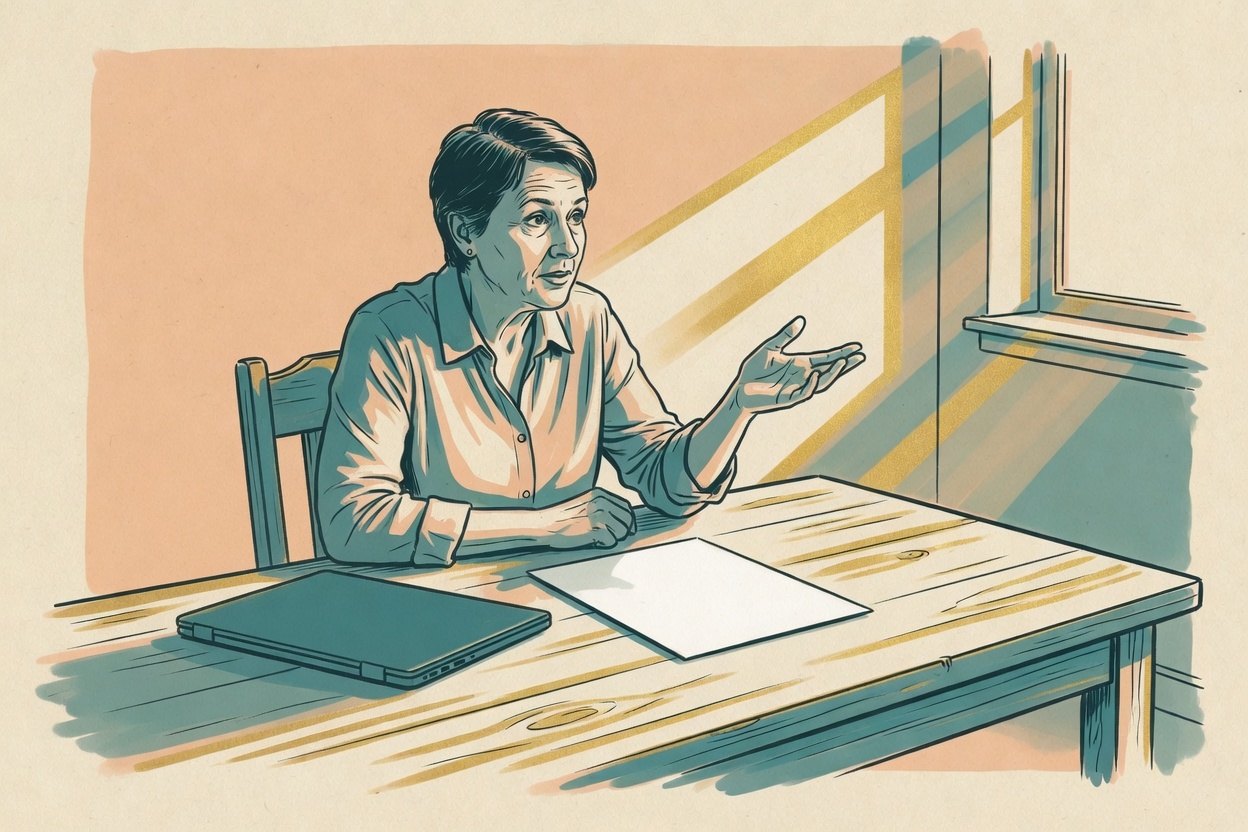
Close the laptop. Say it to a blank page or to a person. If the explanation needs the thread, the thinking is still in the tool.
This is not a rule against the tool. It is the test you run after you have used one. A student, a teacher marking, and a person who just accepted generated code are under the same test.
-
Close it
The thread is not allowed to help.
-
Say it
To a person, or onto a blank page.
-
Notice the gap
Whatever you cannot say is still in the tool.
What does not count
Section titled “What does not count”Reading the thread aloud. Saying “it depends” with no example. Pointing at a paragraph you cannot paraphrase. A student who can only answer while the tab is open has not finished the work, and a marker who can see that should say so. The lesson, if you are the teacher, stays yours. That limit is already in the lesson a teacher already knows how to teach.
For a program, the same test is concrete. What does it do, and what will it break? If you need the tool to answer, you are in vibe coding that still needs a reader.
What you do with the gap
Section titled “What you do with the gap”Write the missing sentence yourself, or go back and practice the question with the chat still closed. Try before you ask is how the gap gets smaller. Opening the thread to paste the gap back in is how it stays.
Do not treat the test as a trap for a learner who used a tool honestly. The invitation is the second attempt, not the shame. If they can say it the second time, the work is theirs.
Discussion
View all discussions on GitHub