Thinking
Write the Objection Before You Open the Chat
One paragraph of your own, including the best objection you can make, before a chat exists. Otherwise you cannot tell its idea from yours.
If the window is open first, the fluent answer arrives as if it had been your thought. You will not be lying on purpose. You will be unable to sort the two.
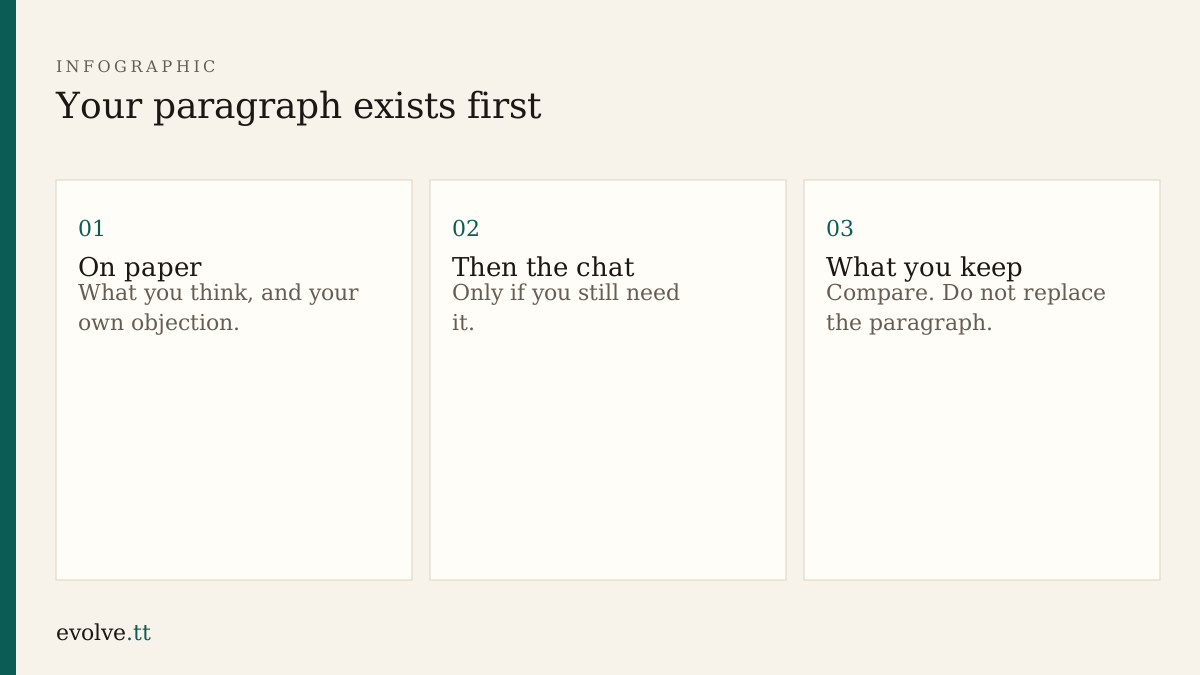
-
On paper
What you think, and the objection you can make.
-
Then the chat
Only if you still need a stronger objection.
-
What you keep
Compare. Do not replace the paragraph wholesale.
The paragraph
Section titled “The paragraph”Four or five sentences is enough. No headings. No performance.
- The claim, in one sentence.
- The reason you currently hold it.
- The best objection you can make without help.
If the third line is “I might be wrong”, that is not an objection. An objection names the point. “The percentage and the grade are different scales” is an objection. “Someone might disagree” is not.
Leave the page blank of anything the tool might later want to fill in: a citation you have not opened, a price, a name. Those are how inventions enter. Write the facts you actually have is the same discipline, pointed at an argument instead of a notice.
Then, if you open it
Section titled “Then, if you open it”You are comparing. Ask for an objection you did not already write. If it only repeats yours, you did not need the tool. If it names a fact, open the source before you adopt it.
Keep a sentence from the reply only when you can say why it beat yours. The rest of the thread is not your paragraph. Sparring is the longer form of this same order.
Discussion
View all discussions on GitHub